Momchilgrad, 6800
Plovdiv, 4000
Computer Engineer and Graphic Designer
Soloist and choreographer since 2006; Event host
5 years of experience in the field of Biotechnologies for Water Treatment Plant (WTP)
Feb 2019 - MSc in Computer Systems and Technologies (5.3 Communication and computer equipment)
Best Thesis Award, UFT-Plovdiv, class of 2019
UNIVERSITY OF FOOD TECHNOLOGIES
Jun 2016 - BSc in Biotechnologies (5.11 Technical Sciences)
SOFIA UNIVERSITY "St. Kliment Ohridski"
Active researcher in scientific projects at the University of Food Technologies. Author of numerous publications indexed in global databases such as Springer & Scopus
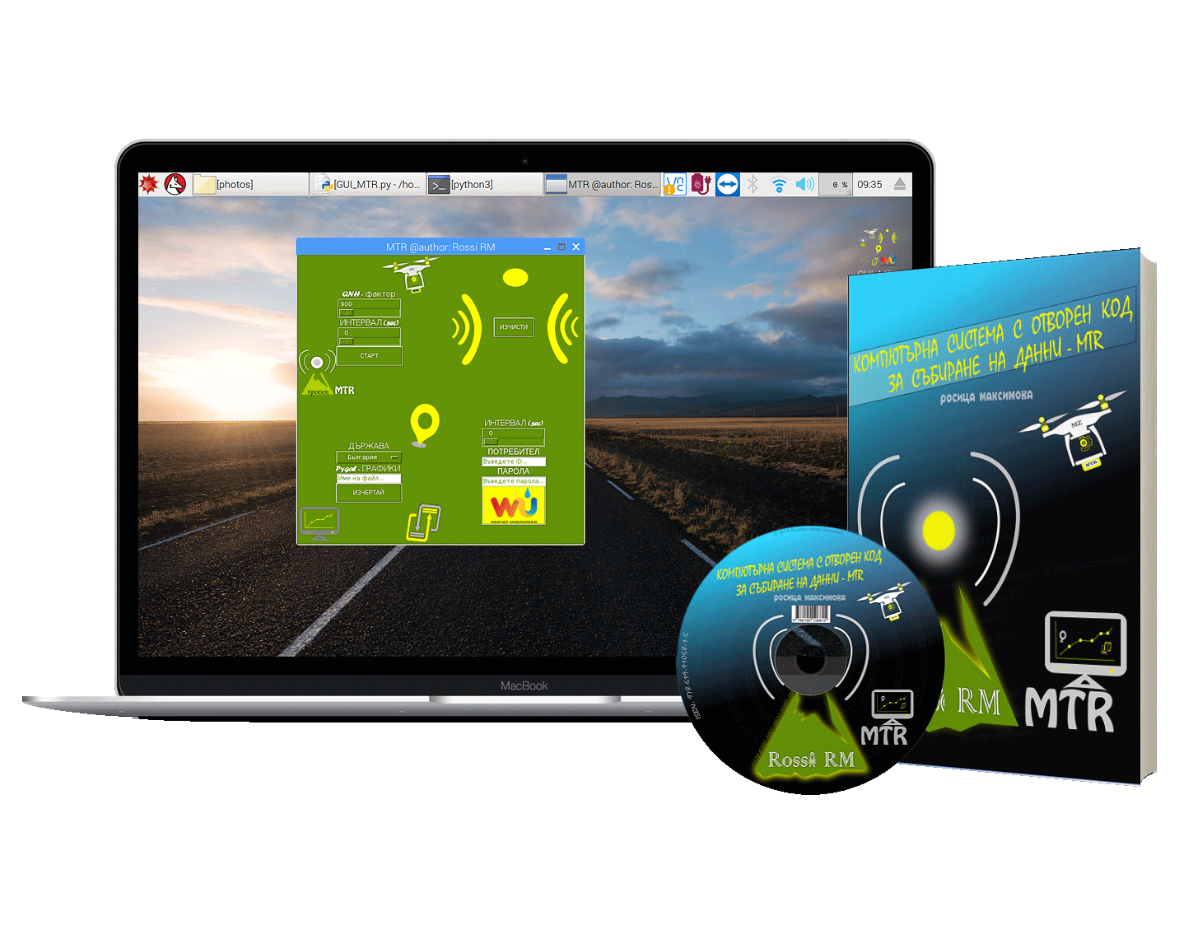
Author of the e-book "Open Source Computer System for Data Collection - MTR" — based on the award-winning master's thesis. The book is intended for computer systems and technologies enthusiasts and aims to inspire innovative applications of the MTR system across various scientific fields.
"There is no such book from which one cannot learn something."
~ Goethe















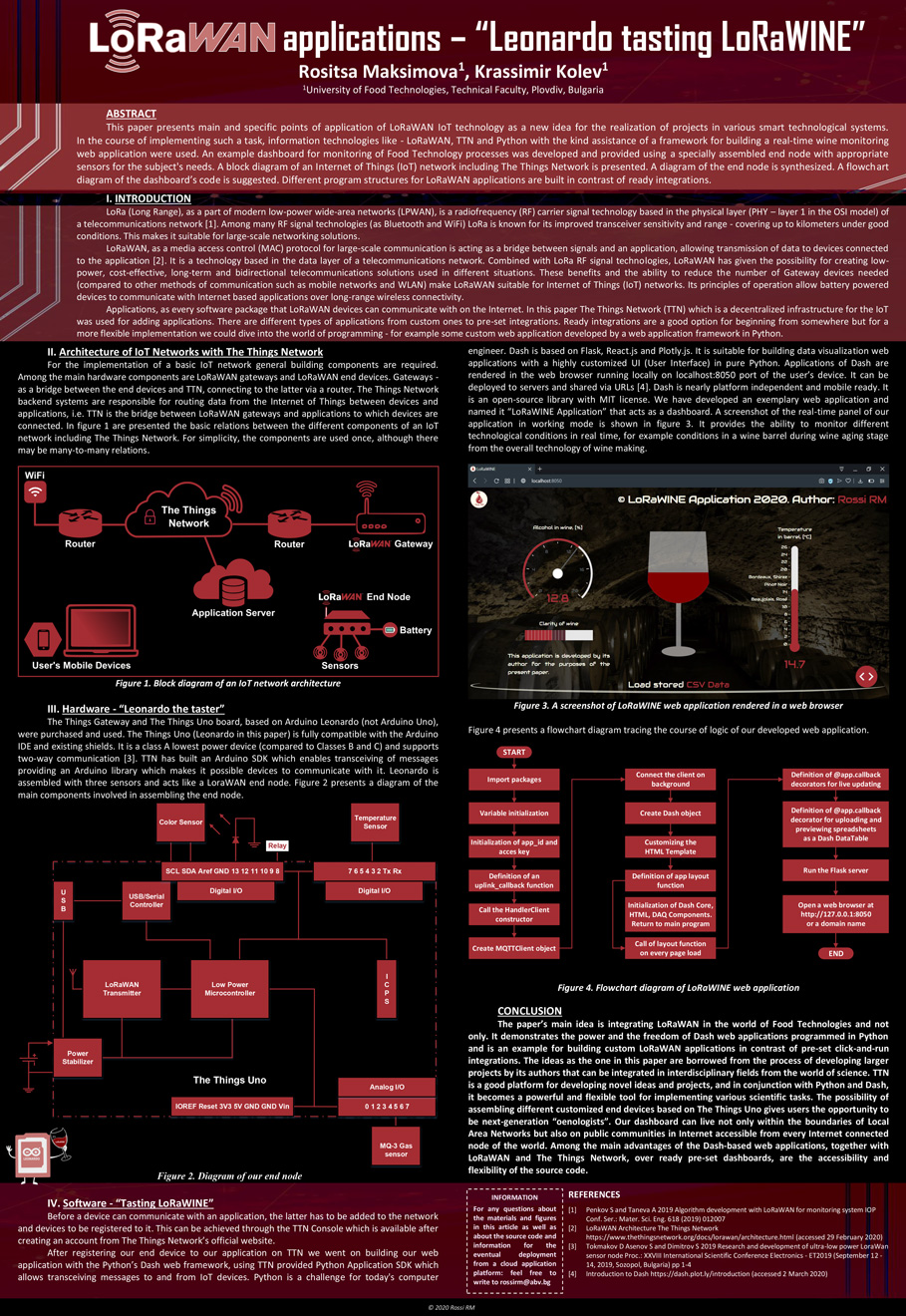 LoRa (Long Range) is part of the modern low-power wide-area networks (LPWAN) and radio frequency (RF) signaling technology based on the physical layer (PHY - layer 1 in the OSI model of computer networks). Therefore, through a LoRa modem, data can be converted into this signal. Although there are other, more well-known radio frequency signal technologies (such as Bluetooth and WiFi), LoRa is known for its improved sensitivity and reception range - covering up to kilometers in good conditions. This makes it suitable for large-scale networking solutions.
LoRaWAN is a media access control (MAC) protocol developed by the LoRa Association for wide-area communication, acting as a bridge between signals and applications. It enables data transmission to devices connected to an application. It is a technology based on the data layer of a telecommunications network. Combined with LoRa radio frequency signaling technology, LoRaWAN enables the creation of low-power, cost-effective, long-range, and two-way telecommunications solutions used in a variety of situations. These advantages and the ability to reduce the number of devices required (compared to other communication methods such as cellular networks and WLAN) make LoRaWAN suitable for Internet of Things (IoT) networks. Its operating principles allow battery-powered devices to communicate with Internet-based applications over a long-range wireless connection.
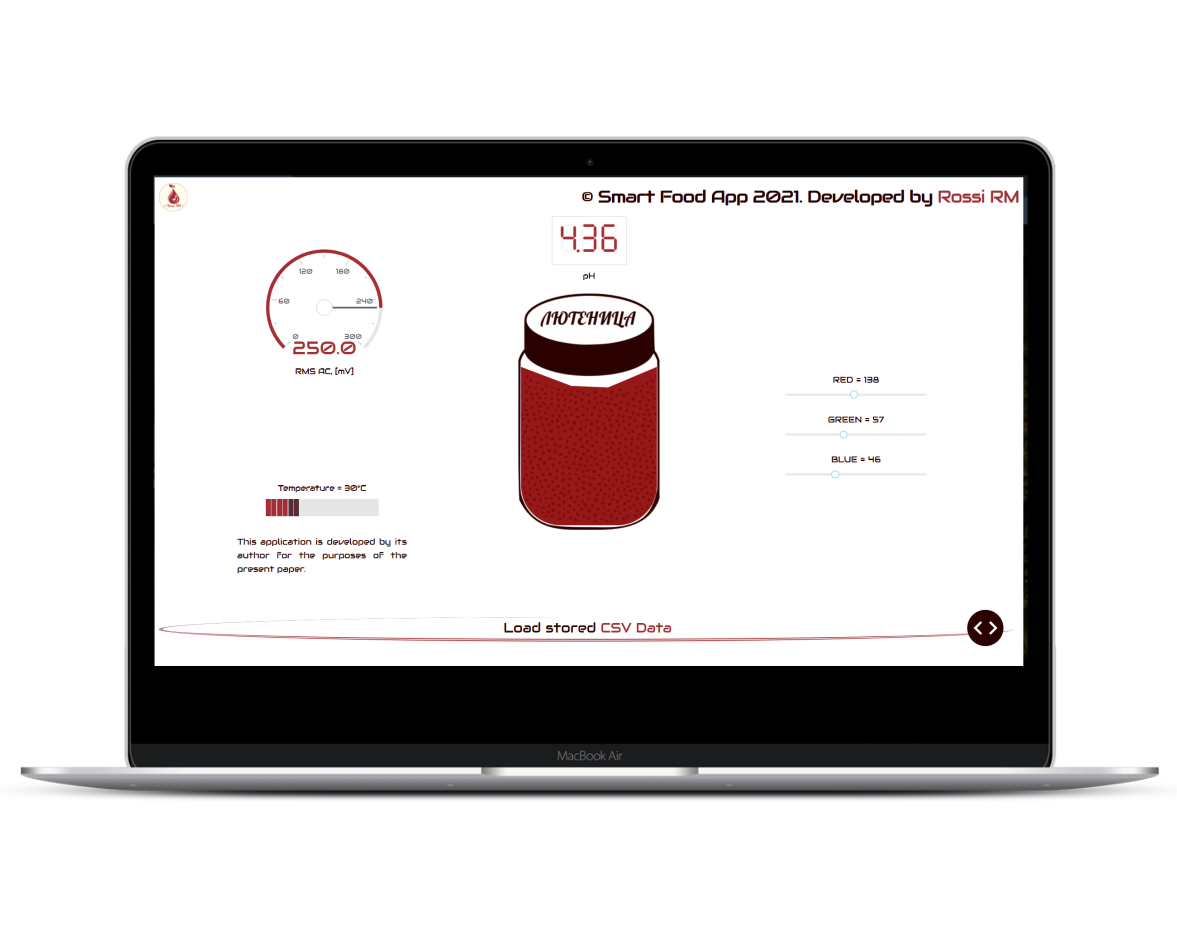
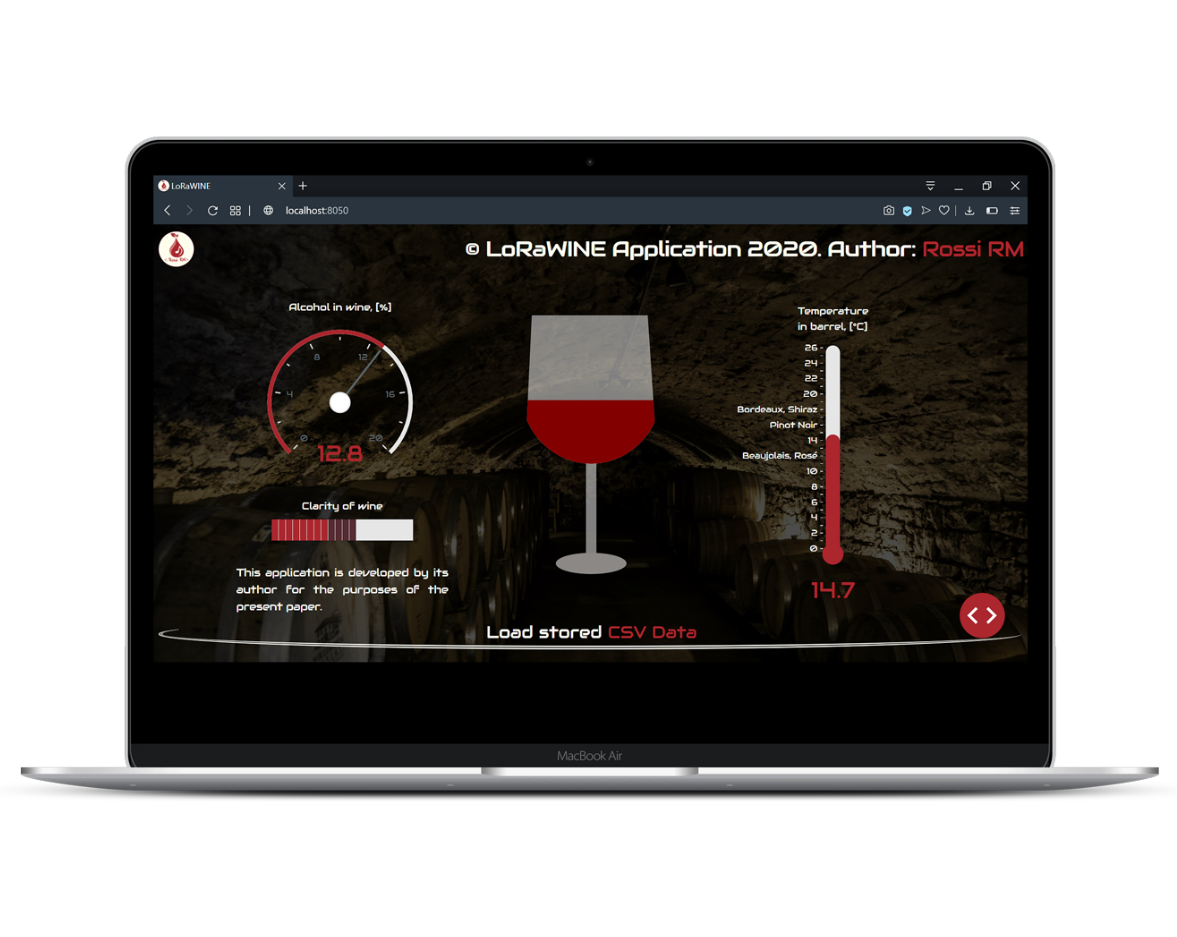
An application can be any software package that LoRaWAN devices can communicate with over the Internet. There are different types of applications from custom to pre-defined integrations provided by various cloud services that can be used without the need to write any code. They are called integrations and include functions such as: synchronization and management of LoRaWAN devices; design, prototyping and visualization of IoT solutions in real time or historical data; collection of application program interfaces (APIs); integrations for sending and receiving data over HTTP protocol; publishing connection data to brokers for real-time data exchange in IoT; integrations for storing persistent data in databases for several days, retrieving the data, using an API available over HTTPS and serving in JSON format; summarizing and analyzing live data streams, etc. Ready-made integrations are a good option for beginners, but for a more flexible implementation we could dive into the world of programming, for example by creating our own and powerful custom web application. For these purposes, a web application named "LoRaWINE Application" has been developed, which acts as a dashboard for monitoring and controlling processes in real time. It is intended for monitoring various technological conditions in real time, for example, conditions in a wine barrel during the wine aging (maturation) stage of the overall wine production technology.